 |
|||
| DMF Home | About DMF | Contact DMF | DMF Offices |
 | |||
|
HABITATS Red drum live in coastal and estuarine waters from Massachusetts to Mexico, feeding on the bottom for crabs, shrimp, menhaden, mullet and spot. Most red drum reach sexual maturity during their fourth year, when they are about 30 to 37 inches long. Spawning takes place in the waters around the coastal inlets and in some areas of Pamlico Sound during the fall. Their eggs hatch within 24 hours and are carried throughout the sounds and estuaries by the tides and winds. Estuaries are areas where a river meets the sea. Here salty ocean water mixes with fresh river water, creating one of the earth’s most productive environments, where young animals find abundant food and shelter in the brackish marshes along the sounds.
For the first three to four years of their lives, red drum live in the sounds and estuaries or in the surf zones along inlets. As they mature, they are more frequently found in the ocean but still use the estuaries and inlets to feed and spawn. While the numbers of larger and older fish have declined, some fish are still taken that are as much as 60 years old. |
Management Options and Catch Limits |
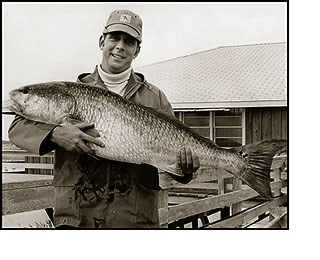 Red drum, like 90 percent of North Carolina’s economically important species, are estuarine dependent - that means they depend on the estuaries during the early stages of their life cycle. The larval red drum seek quiet, shallow water with grassy or muddy bottoms.
|
| NC Division of Marine Fisheries - 3441 Arendell Street - Morehead City, NC 28557 - 252-726-7021 or 800-682-2632 |