 |
|||
| DMF Home | About DMF | Contact DMF | DMF Offices |
 | |||
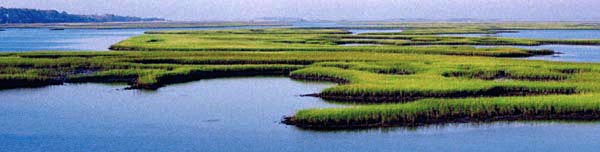
| North Carolina's Nursery System Salt marshes and esturaries along our coast serve as nursery grounds for 90 percent of our fisheries. North Carolina was the first state to designate nursery areas to protect these fragile ecosystems - today our nursery system serves as a model for other states. There are three categories of nursery areas in our coastal waters: |
Primary Nursery Areas are located in the upper portions of creeks and bays. These areas are usually shallow with soft muddy bottoms and surrounded by marshes and wetlands. Low salinity and the abundance of food in these areas is ideal for young fish and shellfish. To protect juveniles, many commercial fishing activities are prohibited in these waters; including the use of trawl nets, seine nets, dredges or any mechanical methods used for taking clams or oysters. If a violator is caught in a Primary Nursery Area, he is faced with a very substantial penalty. There are 80,144 acres designated as Primary Nursery Areas. |
Secondary Nursery Areas are located in the lower portions of creeks and bays. As they develop and grow, young fish and shellfish, primarily blue crabs and shrimp, move into these waters. Trawling is not allowed in the Secondary Nursery Areas. There are 35,502 acres designated as Secondary Nursery Areas. |
Special Secondary Nursery Areas are located adjacent to Secondary Nursery Areas but closer to the open waters of our sounds and the ocean. The majority of the year when juvenile species are abundant, these waters are closed to trawling. There are 31,362 acres designated as Special Secondary Nursery Areas. |
Back to the Homepage |