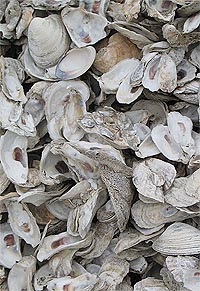
North Carolina is launching an innovative recycling program to collect oyster shells from individuals and businesses and place them back overboard to help turn the tide on declining oyster stocks.
Baby oysters begin life as free-floating organisms but quickly settle to the bottom attaching themselves to hard surfaces. That's why oysters grow in clumps on pilings and concrete, but their favorite most productive place to grow is on other shells.
A mound of oyster shells placed in brackish water with good tidal flow will quickly become colonized by a multitude of marine organisms, including oysters. This mound, also called an oyster reef, serves a number of purposes - first and foremost, it helps produce oysters.
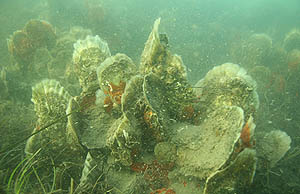
Secondly, it provides habitat for other beneficial organisms, such as algae, worms, barnacles, crabs, small minnows and fish. The small fish attract a diversity of larger fish and before you know it, you have a veritable metropolis of critters congregating at your reef and all you did was put the shells over - in the right spot.
Oysters serve an additional important purpose - they clean water by feeding on plankton and waterborne detritus. One oyster can filter up to 50 gallons of water a day, so the larger and healthier our oyster population, the cleaner the water.
Building the Reefs...