
Habitat Home
Coastal Habitat
Protection Plan
(CHPP)
CHPP Recommendations
Habitat Information
Habitat Mapping &
Monitoring
Documents and Downloads
New documents
added Feb. 2009
Contact Us
CHPP Steering Committee
Related Links
Habitats
Water Column
Shell Bottom
Submerged Aquatic
Vegetation
Wetlands
Soft Bottom
Ocean Hard Bottom
Threats to Habitat
|
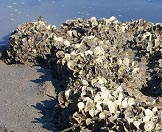
Also known as oyster beds, oyster rocks, oyster reefs, oyster bars, and shell hash.
Ecosystem enhancement
Living shellfish on shell bottom filter algae and bacteria from the water column. Water filtration by oysters, clams, and other shellfish also clears the water column for growth of submerged aquatic vegetation. Shell bottom protects shorelines from erosion.
Fish use of shell bottom habitat
· Oysters and other shellfish attach to the hard shell surfaces.
· At least 12 economically important fishery species, such as blue crab, sheepshead, and stone crab, and many other non-fishery species, use shell bottom as a nursery.
· Larger benthic feeding fish, like drums, black sea bass, and southern flounder forage on and around shell bottom habitat.
· Small resident species, like toadfish (which can grow quite large), gobies, and grass shrimp find refuge and spawning sites among the shells.
Some important facts
· A single oyster can filter 25-30 gallons of water per day
· Oyster rocks were once so numerous they were considered a hazard to navigation
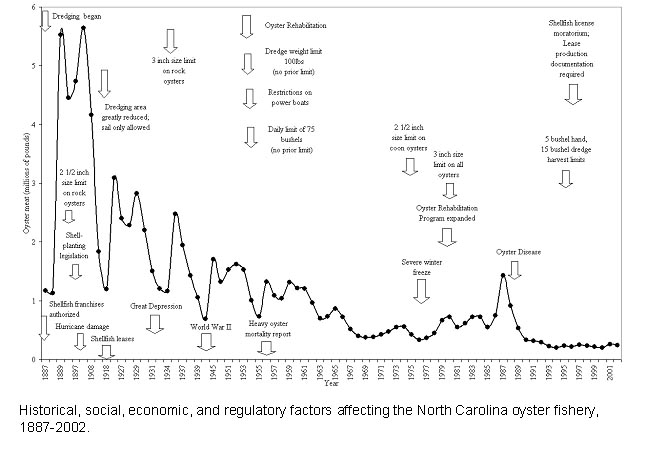
· Commercial harvest of oysters has declined 90% from historic levels (See graph below)
How’s it doing?
The majority of decline in shell bottom was the result of overfishing in the late 1800’s and early 1900’s. (See habitat mapping and monitoring) More recently, water quality problems and disease outbreaks have prevented recovery despite drastically reduced harvest. See Threats to Habitat Index for more information
See Shell Bottom chapter of CHPP (PDF)
|


