
Habitat Home
Coastal Habitat
Protection Plan
(CHPP)
CHPP Recommendations
Habitat Information
Habitat Mapping &
Monitoring
Documents and Downloads
New documents
added Feb. 2009
Contact Us
CHPP Steering Committee
Related Links
Habitats
Water Column
Shell Bottom
Submerged Aquatic
Vegetation
Wetlands
Soft Bottom
Ocean Hard Bottom
Threats to Habitat
|
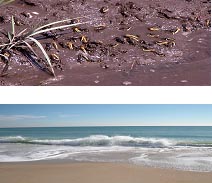 SOFT BOTTOM SOFT BOTTOM
Also known as mud flats, beaches, shoals, holes, sand bars, etc.
Ecosystem enhancement
Soft bottom acts as a storage “battery” for nutrients, sediment, and chemicals, cycling them between the bottom and the water column, thus keeping the ecosystem in balance. Intertidal flats and sand bars buffer wave energy, reducing shoreline erosion.
Fish use of soft bottom habitat
- Bottom algae and tiny benthic animals provide a vast food supply for both young and adult fish, including spot, croaker, mullet, and sturgeon
- Soft bottom provides a hiding place for burrowing marine animals, such as clams and worms, as well as flat-bodied predators like flounders
- Shallow soft bottom, especially adjacent to wetlands, is used as a primary nursery area for numerous fish and invertebrates, including flounder, shrimp, spot, and kingfish.
Some important facts
- Sturgeon have not recovered despite a total moratorium on harvest for over 10 years, suggesting water quality or habitat issues.
- Nutritious bottom algae needs light for growth just like submerged grasses
- There are enough excess nutrients stored in some estuarine sediments, like the bottom of the Neuse River, to fuel algae blooms and fish kills for many years to come.
How’s it doing?
Although the amount of soft bottom has likely increased from human activities, the quality of soft bottom habitat has suffered from nutrient overenrichment, chemical pollution, sedimentation, and dredging. Dredging is a problem primarily in shallow water areas, where deepening causes a reduction in nursery value. See Threats to Habitat Index for more information
See Soft Bottom chapter of CHPP
|


